Explainer

What counts as carbon removal, exactly?

Removal means taking CO₂ that is already up there and putting it somewhere it will stay. Simple enough as a sentence. Nearly every hard problem in this market is hiding in the detail below it.

Removal and avoidance are different products

This one distinction decides whether a claim survives contact with an auditor, and it gets blurred all the time, not always by accident.

Avoidance is an emission that never happened: a wind farm instead of a coal plant, a forest left standing. Compared with some other version of events there is less CO₂ up there, but nothing came out. The whole claim rests on what you assume would otherwise have occurred, and nobody can check that assumption.

Removal is CO₂ physically leaving the air and entering storage. You can weigh it and you can sample it. None of it hangs on an imagined alternative.

Both belong in climate policy. They are not substitutes, and a portfolio that blends them and calls the result removal is claiming more than it bought. We list removal only.

The three questions

Three questions that sort the real from the rest

Every serious assessment comes down to these three. A seller who cannot answer all of them is selling something other than what the label says.

1. Did the carbon actually come out of the air?

Not whether a model says so. Whether something measured it. Ask which instrument produced the figure, who last calibrated it, and whether you can see the raw reading instead of a summary.

2. How long does it stay put?

Durability runs from a few decades to geological time. A forty-year tonne and a ten-thousand-year tonne are different goods and should not cost the same.

3. Who signed it off, and who paid them?

If the developer picked the verifier and settled the invoice, independence is a word rather than an arrangement. Ask how the auditor got the job.

Pathways

The main routes, and what each one costs you

No pathway wins outright. Each strikes a different balance between price, how long it holds, and how confidently anyone can measure it.

Biochar
Biomass pyrolysed into stable carbon, applied to soil. Measured by mass balance plus lab assay.
500–1,000 yrs
Enhanced rock weathering
Crushed silicate rock reacts with CO₂ and rainwater to form stable bicarbonate. Hardest of the four to measure precisely.
10,000+ yrs
Direct air capture
Industrial filters pull CO₂ from ambient air; it is mineralised underground. Easiest to measure, most expensive.
Permanent
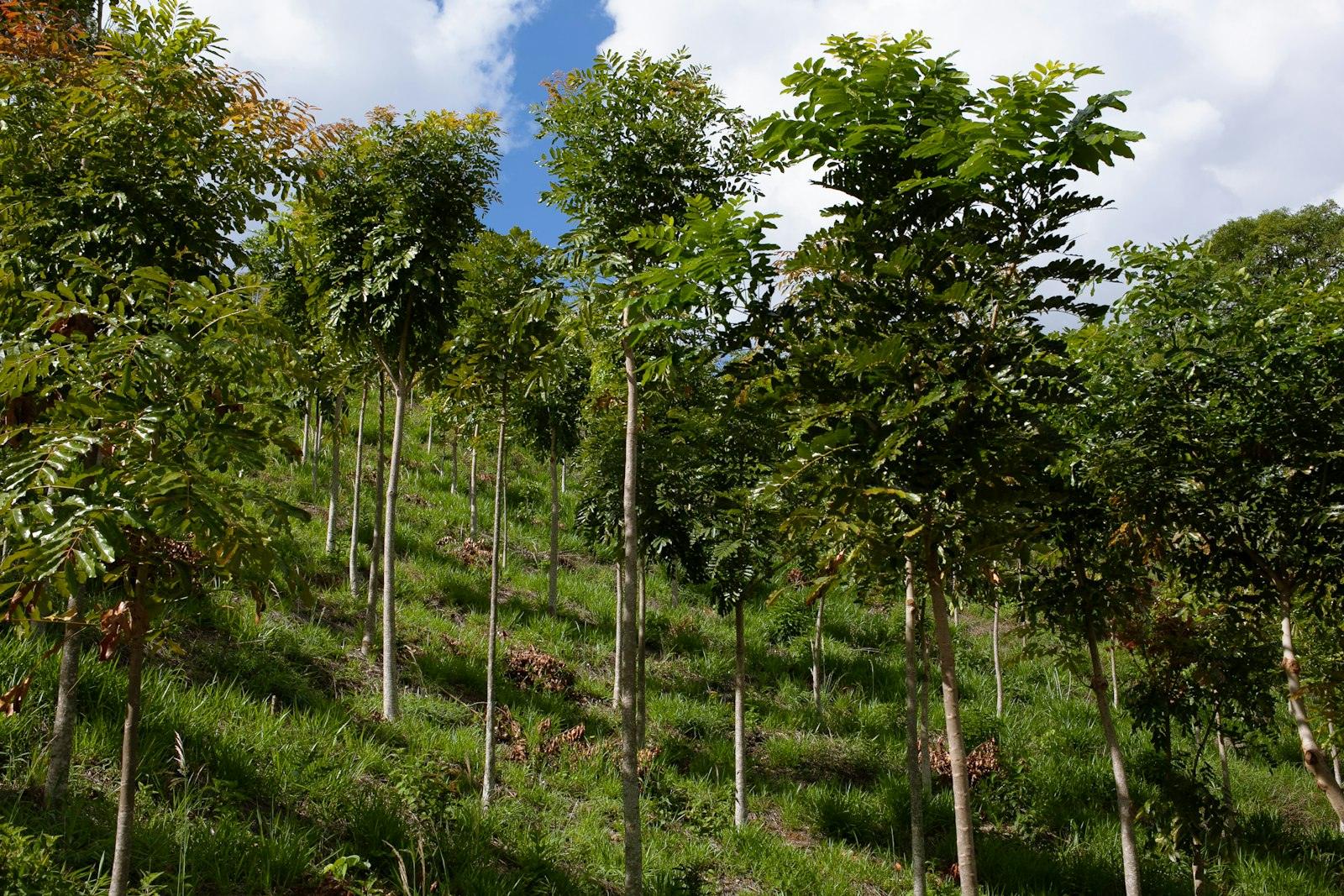
Reforestation
Native restoration on degraded land, monitored by LiDAR and ground plots. Cheapest, but carries reversal risk.
40–100 yrs
Reversal

Biological storage can hand the carbon back.

Forests burn. Soil carbon walks out of the ground when the tillage changes. None of that is a reason to skip biological pathways; it is a reason to price and insure them honestly.

The usual answer is a buffer pool: a slice of every issuance held back, unsold, ready to replace credits when a reversal is confirmed. Ask a seller how the buffer is sized, what it has actually paid out, and whether the balance is published anywhere.

How to run diligence
Restored forest canopy
40–100
Years typical
Buffer
Reversal cover
LiDAR
Monitoring

Next

The claim stands or falls on the measurement

Removal is the what. MRV is how anyone knows. It is the part most buyers skim and the first thing most auditors turn to.